Repair
Roof Repair
Where is it actually getting in?
Water shows up where gravity takes it, which is usually not where it entered. This page is what finding the difference involves.
Not what you are looking at? Metal Roofing, Roof Inspection.
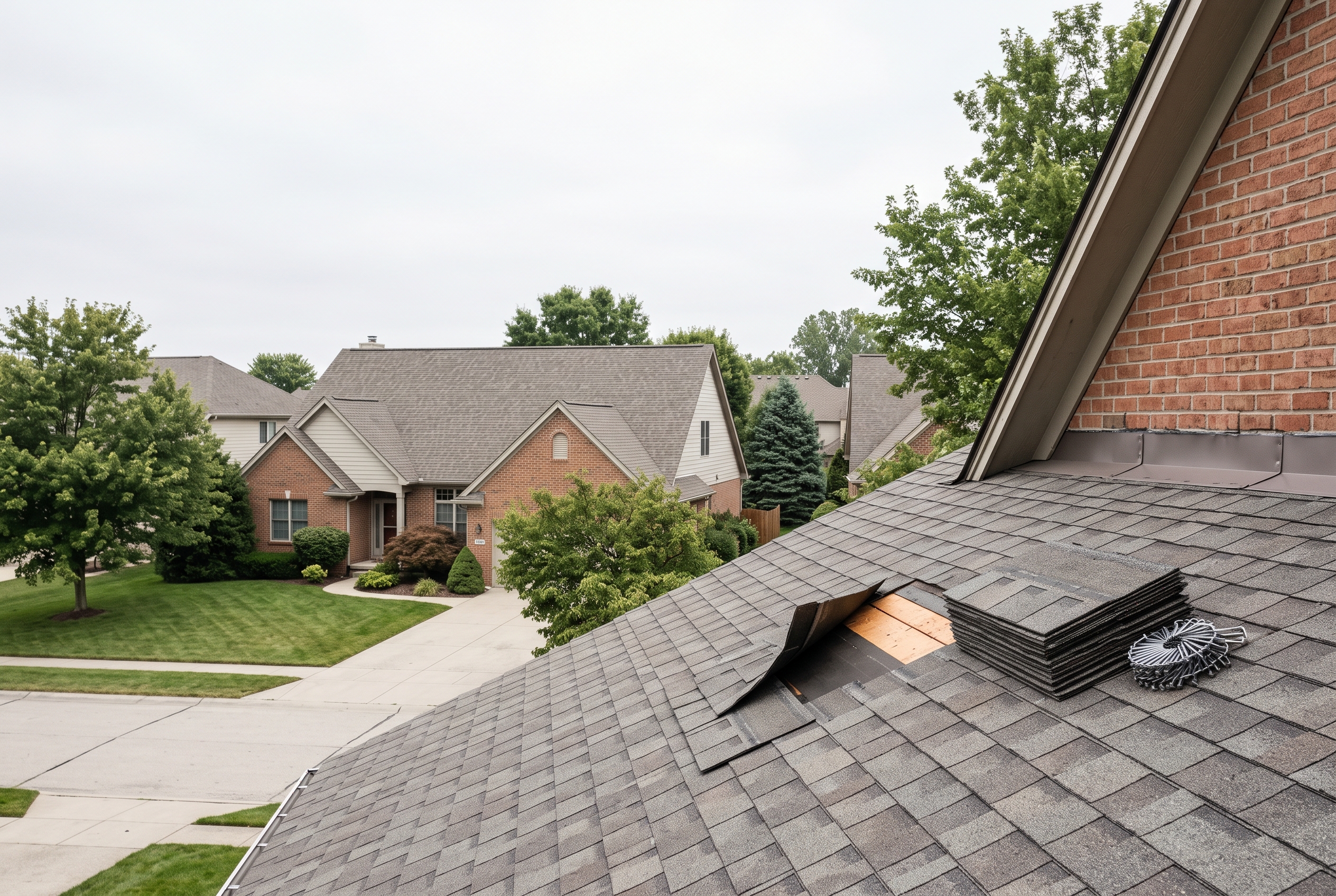
Right now
What to do before anybody arrives.
Move what you can out from under the water and put something down to catch it. Do not go up on a wet or damaged roof to look — that is the part that injures people, and it can wait for somebody with the equipment.
What you are seeing
The things that usually bring somebody to this page.
None of these on its own tells you how serious it is. Together they tell an inspector where to start looking.
- A stain on a ceiling or a wall, wet or long dried
- Shingles lifted, cracked, curling or missing after wind
- Granules collecting in the gutters or at the downspout
- Daylight or damp visible in the roof space
- Flashing lifting where the roof meets a wall, chimney or vent
How the cause is found
What happens on the roof, in order.
Water rarely enters where it appears. The point of the inspection is to find where it actually got in, which is often several feet uphill of the stain.
- 01The interior first — where the water shows, and what is above it
- 02The roof surface, section by section, including penetrations and valleys
- 03Flashing, seals and anywhere two planes meet
- 04The roof space where it can be reached, for the underside of the deck
- 05Photographs of each finding, so the report is evidence rather than opinion
The work itself
What Roof Repair involves.
Leaks, lifted or missing shingles, flashing and penetrations — traced to where the water actually enters, repaired, then checked.
Repair, or replace
When a repair is the right answer.
A sound roof with a local failure is repaired. That is most of them, and a company reaching for a replacement every time is not inspecting properly.
- The damage is confined and the surrounding surface is sound
- The deck underneath is dry and structurally intact
- The roof has seasons left in it by condition, not only by age
When replacement becomes the honest answer.
There is a point where repairing costs more over two years than replacing once. An inspection should tell you which side of it you are on.
- Failures in several separate areas rather than one
- The deck is soft or has taken water over a long period
- The covering has reached the end of its service life across the whole plane
What you are left with
Photographs, and a written scope.
Every finding is photographed before anything is touched and again once the work is done. You keep both, whatever you decide to do next.
Repair, or replace
Is a repair even the right job here?
Worth asking before anybody comes out. A company that never asks it is not inspecting properly.
Almost every roof sits somewhere along here rather than at an end.
Nothing here decides it.
Answer what you can and the line will show which end of the conversation you are nearer. It is a way of understanding the question, not an answer to it.
This is not a diagnosis and it is not a quote. A roof is decided by somebody getting onto it and looking at the deck, the flashings and the valleys.
Have somebody look at itThe next step
Start with a look at the roof.
None of this can be decided from a photo or a phone call. The inspection is what turns it into an answer, and you keep what it finds either way.
Frisco · Plano · McKinney