01
Replacement
Metal Roofing
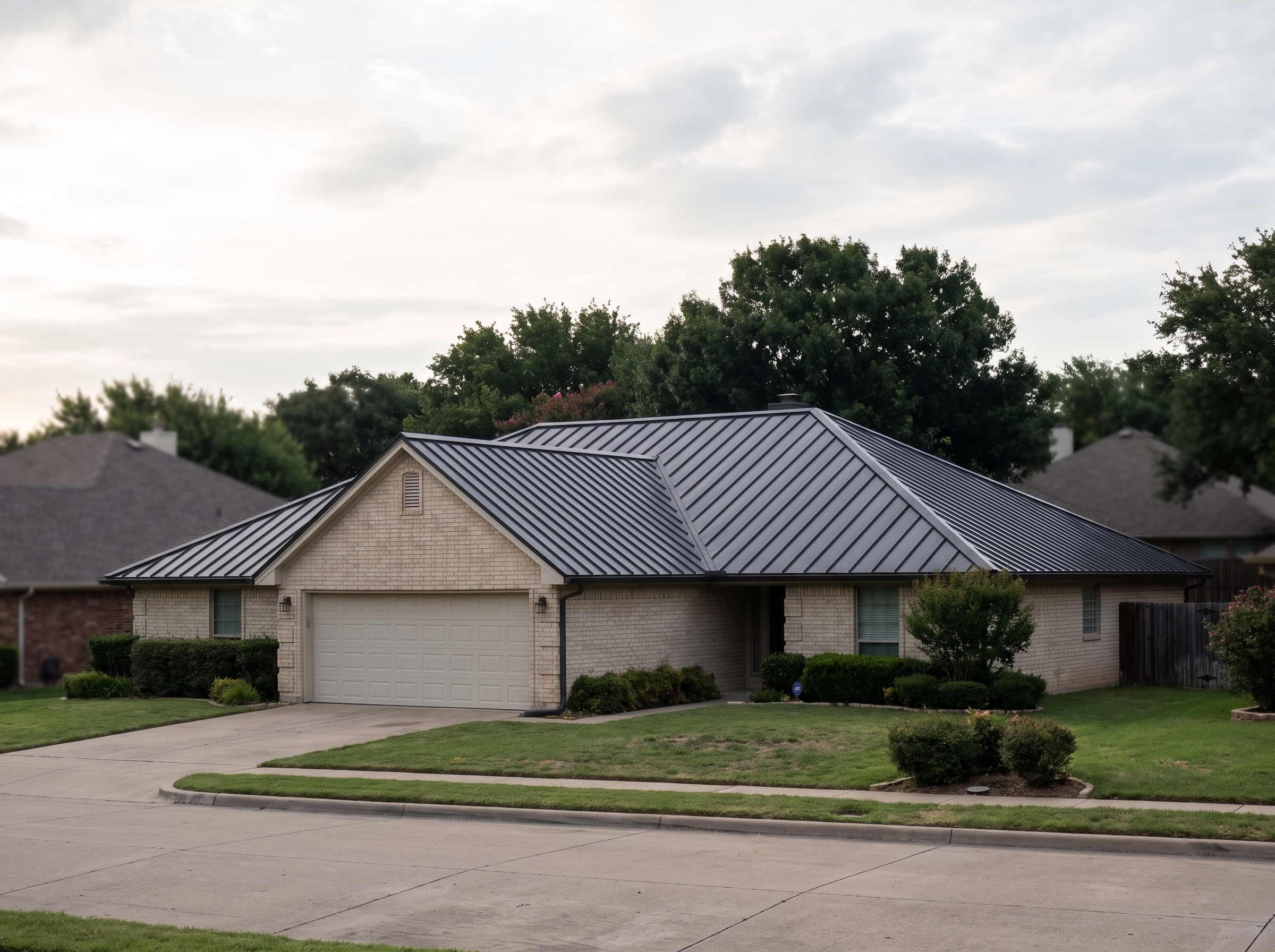
Standing seam or metal panel systems. A longer service life and a different detailing discipline, particularly at penetrations and terminations.
What this involvesFrisco · Plano · McKinney
Standing seam and shingle work across Frisco, Plano and McKinney. We survey the roof and put what we find in writing before anything is sold.
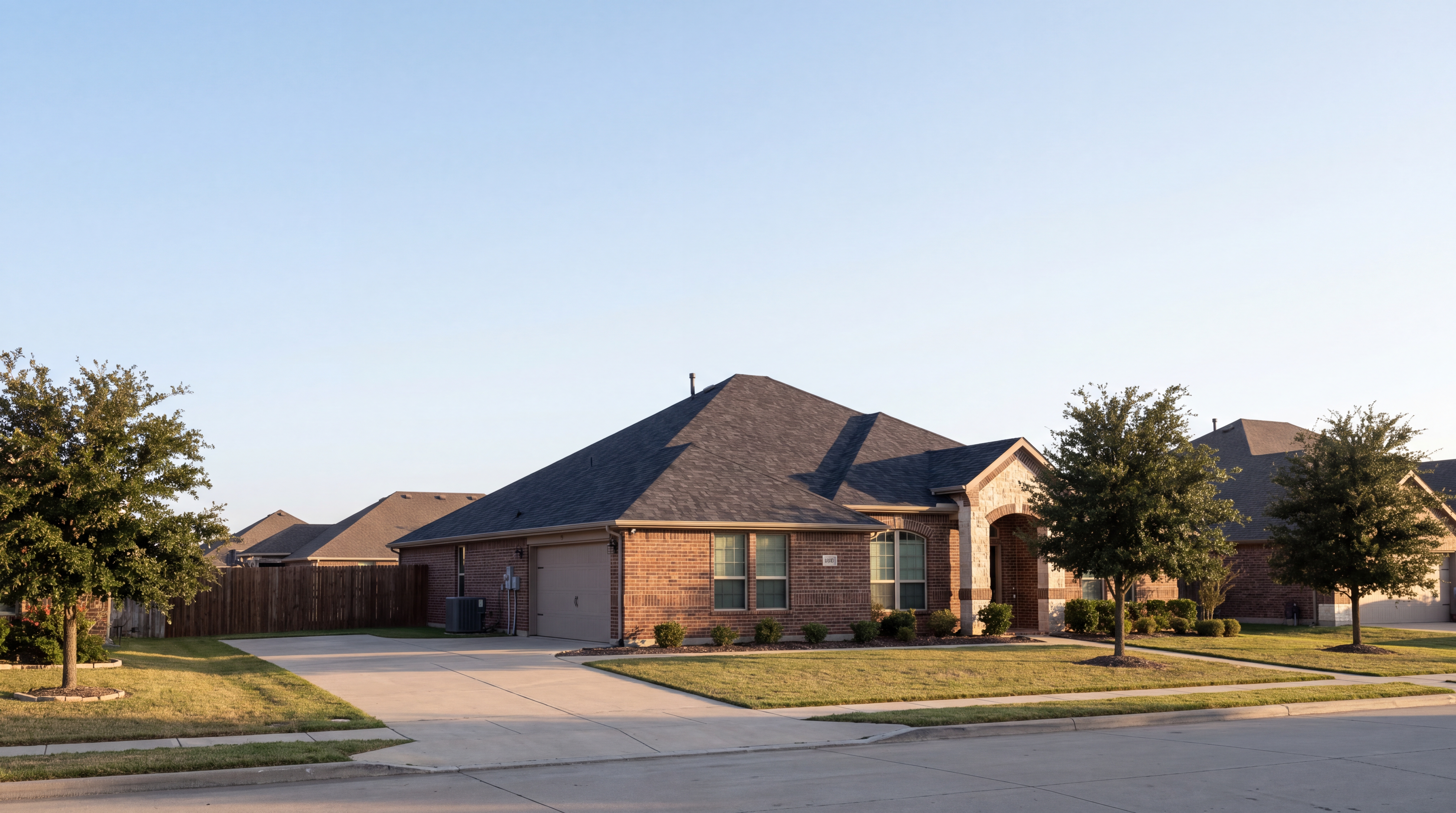
Illustration — not this company’s own work
What we take on
The order is ours. The 3 below are where most conversations start; the 2 after them are the particular jobs those turn into once somebody has been up and looked. All 5 are work we take on.
01
Replacement
Standing seam or metal panel systems. A longer service life and a different detailing discipline, particularly at penetrations and terminations.
What this involves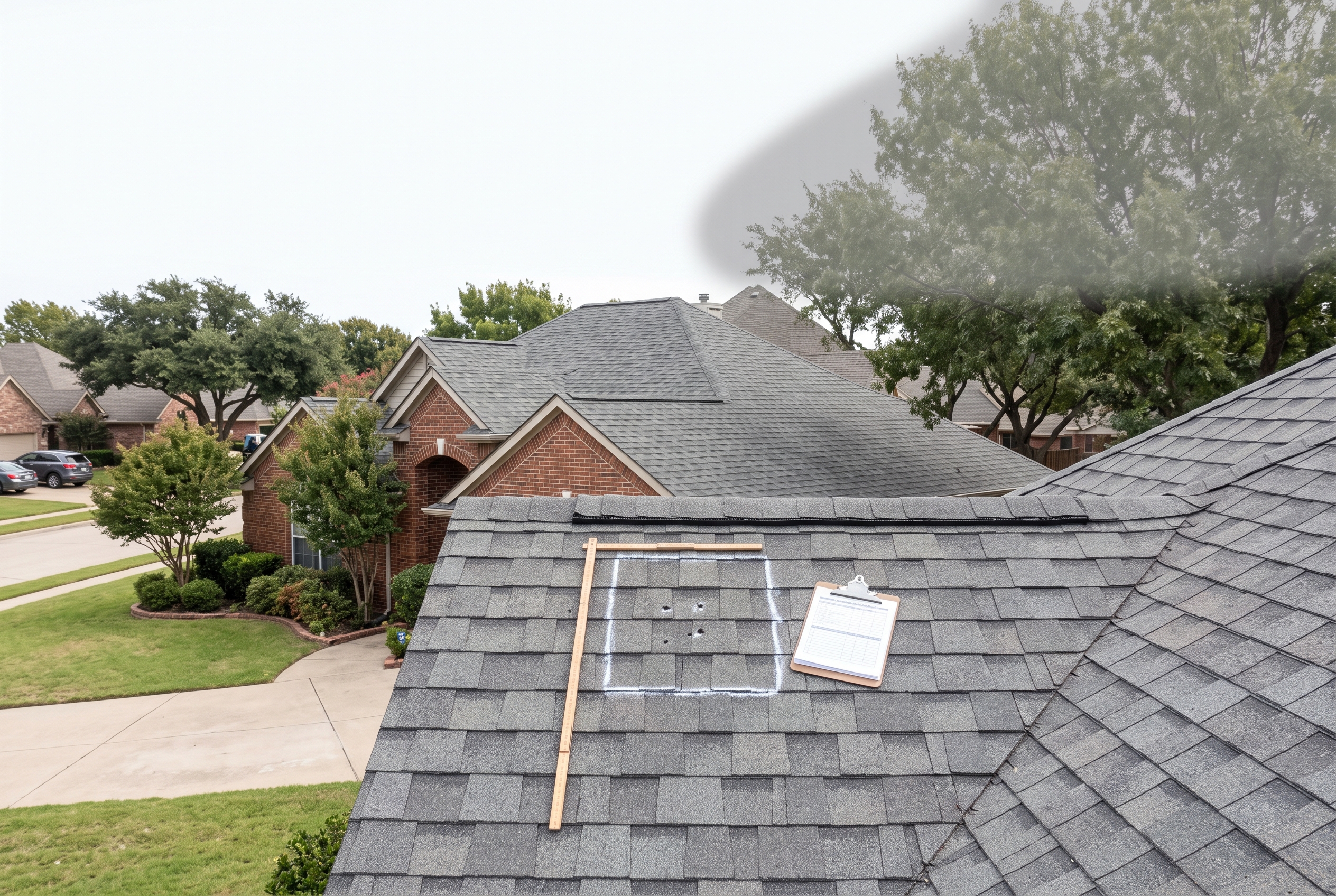
02
Inspection
A condition report with photographs, so where the roof actually stands is established before anything is decided.
What this involves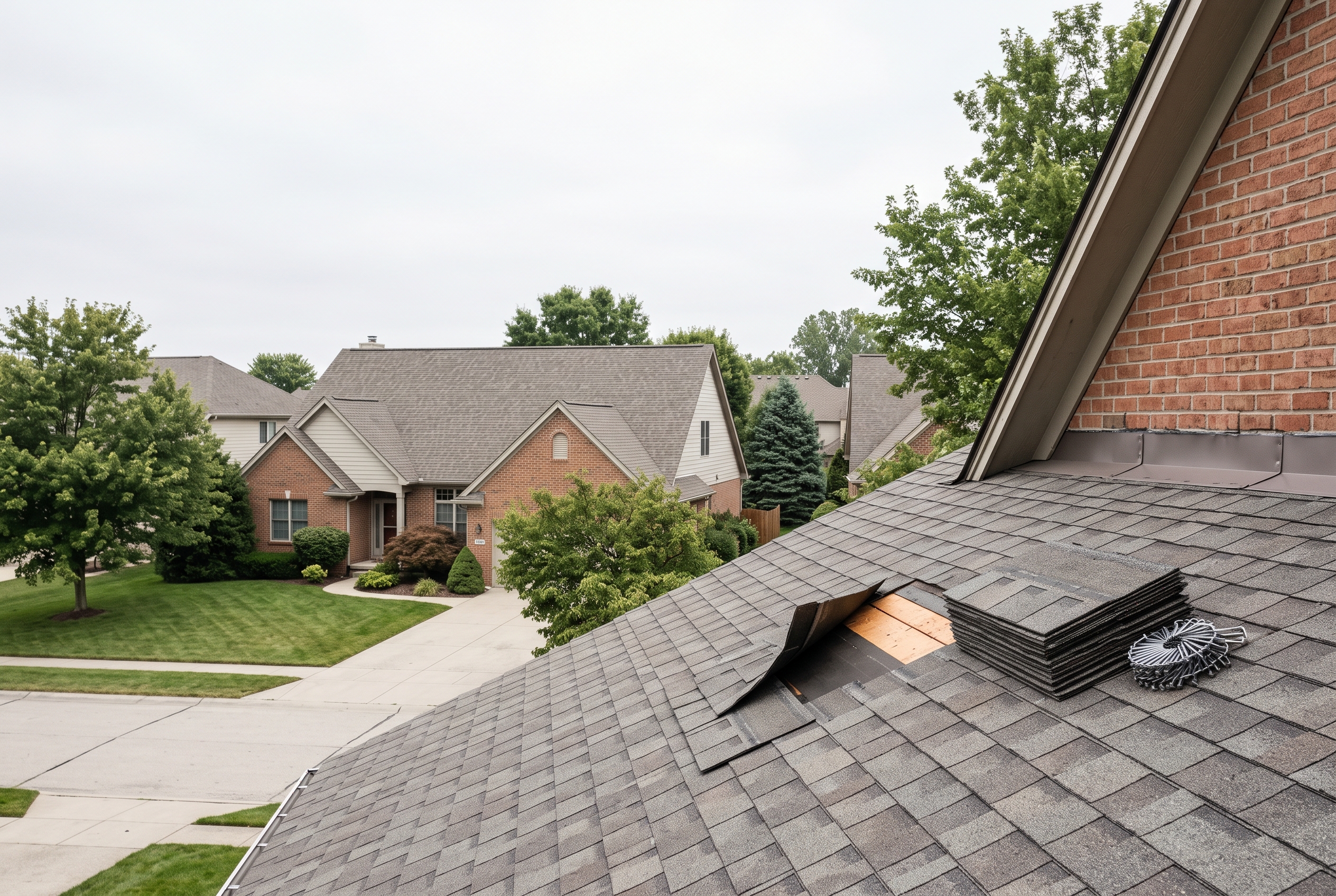
03
Repair
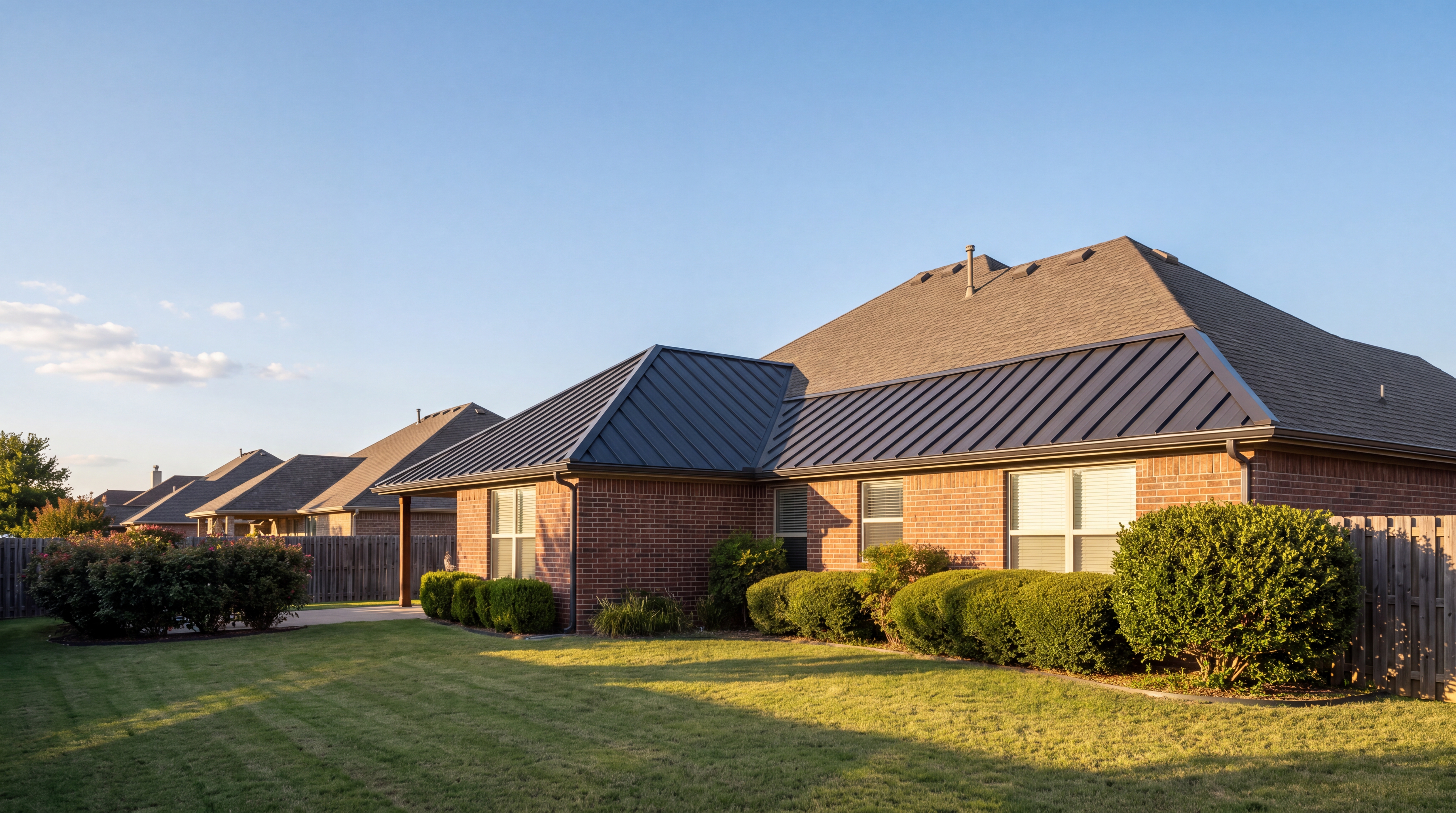
Leaks, lifted or missing shingles, flashing and penetrations — traced to where the water actually enters, repaired, then checked.
What this involvesBefore you call anybody
Six things you can see from the ground, from a window, or from inside the roof space. None of them decides anything on its own — together they tell somebody where to start looking.
Usually wind, age, or fasteners that have let go. One or two after a storm is a repair. The same thing across several elevations is the covering telling you it is finishing.
The mineral surface is what protects the mat underneath from sunlight. A little after a new roof is normal; a steady accumulation years in usually means the surface is wearing out.
By the time it is visible inside, water has usually been travelling along timber for a while. The stain marks where it arrived, not where it got in — which is why patching the mark rarely works.
Flashing seals every junction the shingles cannot. A great many leaks turn out to be a flashing detail rather than a failed shingle, which is good news: it is usually the cheaper of the two.
Light coming through means a gap. Damp without light can mean condensation from poor ventilation rather than a leak — the two look similar from below and are fixed very differently.
Sagging between rafters usually means the sheathing has taken water over a long period. This is the one on the list that stops being a surface job, and the one worth looking at soonest.
None of this is a diagnosis, and it is not meant to be — you cannot tell a worn surface from a failed detail without getting onto the roof. What it is for is knowing whether what you are seeing is worth somebody’s attention.
Ask somebody to look at itRepair, or replace
It is rarely a choice between two products. It is one judgement with two ends, and most roofs sit somewhere along it. Here is what the judgement actually turns on.
Almost every roof sits somewhere along here rather than at an end.
Nothing here decides it.
Answer what you can and the line will show which end of the conversation you are nearer. It is a way of understanding the question, not an answer to it.
This is not a diagnosis and it is not a quote. A roof is decided by somebody getting onto it and looking at the deck, the flashings and the valleys.
Have somebody look at itWhat is actually up there
From the ground you can see exactly one of these layers. Almost everything that decides whether a roof keeps water out — and how expensive it is when it stops — is one of the four underneath it.
The only layer you can see from the ground, and the one that takes the weather. When somebody says a roof looks fine, this is what they are looking at.
A water-resistant layer laid over the deck before the shingles go on. It is the second line: what keeps water out when wind drives it under the covering.
Metal at every junction — where the roof meets a wall, a chimney, a vent, or itself in a valley. A great many leaks are a flashing detail rather than a failed shingle.
The structural sheathing everything above is fastened to. Once water has been sitting on it, the repair stops being a surface job.
What carries the load, and the airflow that keeps the underside of the deck dry. Ventilation problems tend to show up as roof problems years later.
What we can show you
The average of every review on file, from Google and collected directly — not a headline figure with the awkward ones left out. 3 is a small number, and it is the real one.
Came out to look at a metal roof two other companies had quoted without going up on it. Explained the pitch problem in a way I actually understood, and did not push me toward a full replacement.
Told me my roof was fine when somebody else had told me it needed replacing. Sent photographs of every slope with the report. That is the whole reason I would call them when it does need doing.
Gutters resized after years of overflow at one corner. Straightforward, tidy, and they explained why the old ones were never going to cope.
Demonstration account. The reviews above are worked examples, not this company’s own customers. They are here to show what this section contains once a real company fills it.
Demonstration case studies
These are worked examples on a demonstration account, not jobs carried out for a customer. They are here to show what a case study on this site contains — the condition found, what was done about it, and where it ended.
How it goes
Everything here happens before anybody is asked to spend anything.
Start at step oneA stain on a ceiling is enough to start with. The chat can book one of our own times when we have one free; the form and the phone get you a call back to agree one.
The covering, the flashings, the valleys and the penetrations, plus the roof space where it can be reached safely — photographed while we are up there.
The photographs and the findings are yours, whether or not you go ahead with any work.
Which one it is comes out of the condition, not a price list. If it is the cheaper one we say so — that is the point of looking before quoting.
What the roof needs is established at the visit, and any price comes in writing afterwards. Nothing starts before you have it in front of you.
Where we work
That is the coverage as it stands — the towns on the record, not a radius drawn around them. If you are just outside, ask before you assume the answer is no.
Service areas in fullThe next step
Tell us what you are seeing. Somebody calls back to arrange a time, goes up, photographs what is there, and tells you what it needs — including when the answer is that it does not need much.
Frisco · Plano · McKinney